Showing posts with label tongue. Show all posts

Monday, October 24, 2011

Tongue Piercing = Bad Idea

You see it all the time.
People with barbells sticking out their tongue.
You may even have one yourself.
But is it safe?
In a word...... NO!
Can you feel a stray hair on your arm? Probably not.
Can you feel a stray hair on your leg? Again, probably not.
Can you feel a hair in your mouth? Absolutely.
The reason for this is because the tongue has more nerves contained in it then almost any other part of your entire body. It is very sensitive and very precise. Therefore, ramming a large steel rod through it will certainly damage these nerves. Piercing the tongue can lead to a loss in ability to feel your tongue and ability to taste food.
Besides loss of taste and feel there are also other dangers.
Since the mouth can not be kept sterile, as other parts you may pierce,
the chance of infection is greater. The above picture is a very nicely infected tongue.
Cracking your teeth on a tongue ring is also a very real concern. I have treated many cracked teeth from people biting down on tongue rings.

Want another reason?
How about this one.
If you catch your tongue ring on something.
You can actually pull it out of your tongue and cause, this......
Look Fun????

My suggestion, DON'T DO IT!!!


Tuesday, October 11, 2011

My Kid Just Knocked Their Front Tooth Out?!


Okay. First of all, as in most traumatic situations.
Do not panic.
Its likely that your child has never gone through this before.
Therefore, they are fairly unaware whether what just happened
to them is simply a minor thing or whether they will soon be in the hospital.
The way they will be able to tell how severe the situation
is is by looking at their parent.
If you are flipping out then they will too.

The first thing to do is to educate yourself BEFORE something like this happens.
It is very important to know when your child's baby teeth will come out naturally.
Here is a chart of, about, when that will happen.
This is important because if the tooth that was just knocked out was about to
come out anyway then there is much less to worry about.
If it's still a year or so away, or you know that its already the permanent tooth
that just got knocked out then there is much more to worry about.


So lets say your child is 8 or 9 years old and it is the adult tooth that just got knocked out.
First thing is to do is obviously check your child for signs of significant injury.
If they hit their face hard enough to knock a tooth out
you need to check for signs of a concussion.
If they seem to be alright except for the tooth then the next step is to find the tooth.
Once the tooth is found treat it very gently.
The tooth is attached to the bone by ligaments.
Parts of those ligaments will still be attached to the tooth and must not be damaged.
First carefully pick off any large pieces of debris.
Secondly the smaller pieces need to be rinsed off.
This is best accomplished by gently rubbing the tooth against the inside of your child's cheek.
This will get all the small particles off and still treat the tooth gently.

Then, are you ready for this..... you need to stick the tooth back in.
That's right, you need to gently place the tooth back into the socket from which it came.
Its pretty simple.
The Skinny part goes in first.
Just simply slide it back into place.
Don't force it. Simply get it as close as you can.
If it wont go or you don't have the stomach for it then place the tooth
into your child's mouth in the bottom jaw in between the cheek and gums.
Holding the tooth there will give it the best chance for survival.
Another idea would be to place it in a glass of milk.
Saliva and milk are the best places for a knocked out tooth.
DON'T place the tooth in a glass of water.
The water will destroy any chance we would have had to
get the tooth to reattach to the body naturally.

Then finally, in all cases, get to a dentist ASAP.
The dentist will know what to do and will give you options depending on the
severity of the accident and the condition of the jaw and tooth.


Monday, October 3, 2011

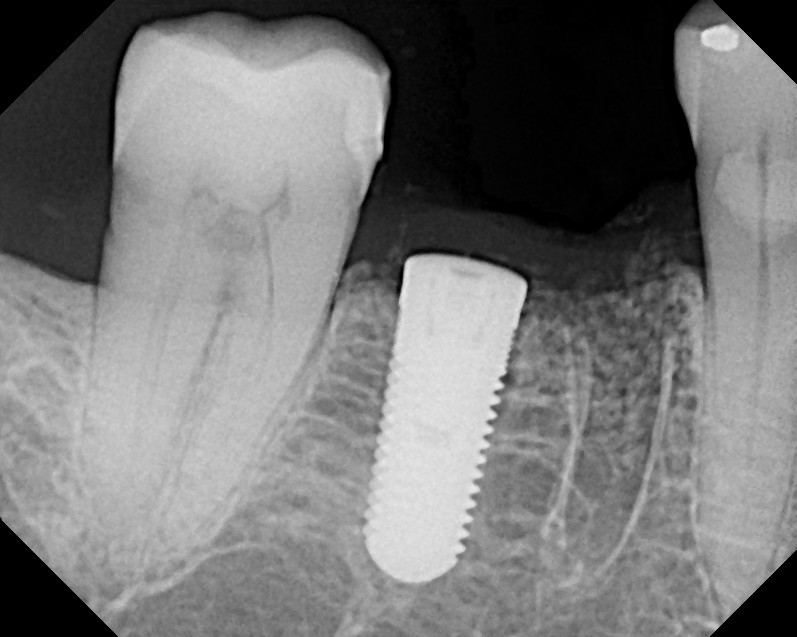
The evolution of an implant.


The evolution of an implant.

#1 Somehow acquire a bad tooth.
Break it off at the gums, have a root canal that fails, etc.
(example of tooth broken off at gums)
#2 Get the tooth extracted and then place the implant.
#3 Attach a post to the implant.
This will serve as a platform on which to place the crown.
#4 Place a crown on the post and you are back to full function.
This entire project took about 3 months to complete.
The patient is very happy with the results.


Wednesday, September 21, 2011

Does your child need to go to pediatric dentist?

Like many things in this world...... it depends.
Pediatric dentists are an amazing tool in the dental community.
I send children to them all the time.
However, there are many many more children
that I never send to them.

Almost everything that a pediatric dentist can do for your child can be done by a general dentist. Placing fillings, straightening teeth, placing space maintainers, extracting teeth,
doing pulpotomies (baby root canals), cleaning teeth, etc.
All of these services are offered by both a pediatric dentist and the general dentist.

So what does a pediatric dentist for?
The thing that, I feel, pediatric dentists are best for is to treat the nervous child.
Children just don't like dentists, doctors, nurses, etc.
We are always the ones giving shots and swabbing throats and so on.
The pediatric dentist is licensed to sedate children.
Whether through I.V. or orally your child can be put to sleep at a pediatric dentists office.

Now, this service will cost more money for the overall treatment but if it is the only way that your child can be treated due to them being scared to death then that is the best thing.

I suggest starting to bring your child to the dentist with you when they are about 3 years old.
Bring the child in for your cleaning. Let them sit in the corner and see that its not such a bad thing to be seen by the dentist. Do the same thing for you next cleaning. At that next appointment we typically will ask to see inside the child's mouth as they sit on the chair in the corner. We simply look around and get the child used to use being in their mouth. After that is done we congratulate the child for being so good and give them a prize. This exercise clears the way for them to be seen for their own cleaning and not be too scared about it because they have already been into the dentist on numerous occasions.

Wednesday, September 14, 2011

Stop sipping the Mtn Dew!!

We see it all the time.
People coming into the office with with their teeth hurting.
I tell them that they have a ton of cavities and they tell me that that is impossible.
Since nothing is impossible I ask them why they think that.
They tell me its because they only drink 1 can of soda pop a day.
I tell them that that's not so bad and that lots of people have a soda at some point during the day.
I then ask them how long it takes them to drink it.
They tell me that they sip on it throughout the day and that it takes them about 4 hours to finish off a can.
Here in lies our problem.
Cavities caused by soda happen due to the time that the teeth are exposed to the sugar and not the amount of sugar ingested.
If I drank an entire 2 liter of Mountain Dew for breakfast and my patient only had 1 can on Mountain Dew but it took him 4 hours to drink his can, who do you think would be worse off?
If you said the guy drinking the can then you are starting to catch on.
Although my sugar content is higher and I may experience more symptoms throughout my body my teeth are much better off. I get the sugar in my mouth and then get it out and I am done. The person who sips on that one can for hours at a time has sugar covering their teeth all the whole time they are sipping. So less sugar but more tooth exposure.

Moral of the story is DO NOT SIP!


Monday, September 12, 2011

Implant case

Wrapped up this case on Friday of last week.
Patient broke off half of her tooth.
The break was severe and extended down under the gums.
Patient did not want a bridge so an implant was chosen.
(Digital picture of tooth)
(X-Ray of tooth)

After the extraction both root sockets were examined and it was
determined that the socket farthest back would work best for the implant.

The implant was placed.
Bone grafting material was placed in the front most socket.
The spot was then stitched shut.
The implant is at bone level and the outcome for this case is extremely favorable.
The patient will now wait for about 6 weeks to make sure
that the implant site heals completely.

After that a tooth will be attached to the implant
and she will be back to her old self.

There are certain situations in which they don't work
but for the most part implants are wonderful.


Friday, September 9, 2011

Does your jaw pop or click?

TMJ is the abbreviation for Temporal Mandibular Joint. It is the joint directly in front of your ear that is used by your body to open and close your mouth. It is, like most other joints in your body, made up of cartilage, fluid, bones, and muscles.. And just like any other joint in the body any piece to this puzzle can deteriorate, get misplaced, damaged, or have any other number of problems.
If any sort of damage does occur then pain, clicking, popping may result.
If you have had any of the above symptoms the best thing to do
is to see your dentist right away.
He/she needs to determine what is the cause of your TMJ discomfort and
what, if anything, can be done to solve the problem.


Thursday, September 1, 2011

I cracked my front tooth! What now?

Okay so you, your child, your mom, your brother, etc. etc. just fell face first into something, over something, under something, etc. etc. and broke the corner of your/their front tooth off.


What do you do now?


Well, that depends. Lets break this down into 3 simplified categories.
The nerve of a tooth is in the middle of the tooth.


#1 If you just broke off a small corner of the tooth and it didn't reach the nerve then a simple filling is probably all you would need.


#2 If you broke off a larger corner but still didn't reach the nerve then you more then likely would need a crown.


#3 If you broke your tooth so severely that you got down into the nerve then you will need a root canal AND a crown.
And although all of this may be a traumatic experience don't worry. Your cracked and broken smile can be completely repaired and have you back to being the model you know you were born to be.


Tuesday, August 30, 2011

Why are new fillings sensitive sometimes?


New fillings that are placed by your dentist should not be sensitive.
If they are they should not remain that way for long.
Some very large fillings may take longer then others, but
eventually every filling should calm down.


So what exactly is going on when a fillings sensitive?
It has to do with expansion and contraction.


As with most things, when a tooth is exposed to hot or cold
temperatures it will expand or contract accordingly.


If a tooth has never had a filling it will all contract and expand at the same time.


If a tooth HAS had a filling however this is where we may get an issue.
If the tooth and the filling have a different point at which they want
to expand or contract then there can be some discomfort.
Over time this discomfort should go away as the tooth gets used to the filling.
If the discomfort does not go away then the filling needs to be re-done.
If it still hurts then there are some different types of filling materials that can be used.
If it still hurts then other treatments may be needed.


Filling sensitivity is a funny thing.
Someone can get 4 fillings in the same day.
Same doctor.
Same filling material.
Same everything.
But only 1 will end up hurting.
It is a real tooth by tooth thing and can drive patients, and dentists, crazy!


Monday, August 29, 2011

How do I say this gently?


Almost everyday I have to tell someone, that has
never had a cavity, that they have a cavity.


Many of these people are in the 50's or 60's.


They spend lots of time brushing and flossing and have never had a
cavity and don't understand how they now are getting cavities when
they are doing the same things that they have always done to keep their teeth clean.


At this point I have to be very diplomatic.


The simple answer is...... you are getting older.


As we age things will begin to break down.


These people have no problem accepting that their eyesight isn't what is used to be.
Or that their hearing may be a little worse then it was when they were younger.
But for some reason, the fact that their teeth are also wearing down is a new concept.


Every part of our bodies will break down over time.
Teeth will follow right along with the rest of it.


The forces of a lifetime of chewing mixed in with the fact that salivary flow
rates decrease as we age (thus less protection for our teeth) means that
an increase in cavities over time is almost inevitable.


Thursday, August 25, 2011

Teething in a 6 year old?

Teething pains. In a six year old.

We all know about the teething that happens in the first year of your child's life.
But not too many people are familiar with the teething that happens when a child in 6.
At the age of 6 years old, or so, your child will get in their first adult molars.
They are called, 6 year molars.
These teeth are the largest teeth that anyone will ever have in their mouths.
These teeth are not the little pointy teeth that little kids get in the front of their mouths.
These teeth are large and flat.
They need to place more force in order to break through the gums then the little ones do.


Therefore, if your child is around the age of 6 years and they complain about pain
way in the back of their mouth they may just be teething all over again.
Its always a good idea to get things checked out by a dental
professional just to insure that they do not have active cavities causing this ache.
But more often then not it will simply be the child's first molars coming in.


The best thing to do is treat this case of tooth eruption just like the others.
A mild over the counter pain killer such as Tylenol or ibuprofen and
then some orajel at the spot the tooth is coming in.


Tuesday, August 23, 2011

Veneers with no drilling or shots


Much has been made in the media recently about getting veneers.


Veneers are a great product.


They can fix a multitude of problems such as discoloration,
slight tooth rotations and crowding.


There are two types of veneers however.


The one that I will talk briefly about today is the kind of veneer called no-prep.


These veneers require no shots. No drilling. And disturb non of the natural tooth structure.


The patient simply comes to the dentist, gets a few impressions taken,
and shows up 2 weeks later to get the veneers placed.


The veneers are basically like fake fingernails except they do not need to be replaced
except for the rare case that they were to break off.


The only down side is that these types of veneers may make your teeth look a little bulky.


They are only .3 mm thick. But still your mouth is sensitive enough
to feel a human hair. So even at .3 mm they may take some getting used to.


I would highly recommend that if you have ever thought about veneers
that you take a look at some of these no-prep products.


Wednesday, August 17, 2011

It shouldn't be too hard to pull out, should it?


This happens all the time.
People, who neglect their teeth, will wait until they have a tooth that is
broken off at the gums to come to my office to get it extracted.


The laugh a little nervous laugh and say...
"well, not much left so it should be pretty easy yo pull out, huh?"


The answer to that is, NO.
Imagine getting a fence post out of the ground.
Not the easiest thing in the world, right?
Now, take a chain saw and cut the fence post off at the ground.
How easy is that going to be now?!


If you want a tooth out, please, please, please, do not wait until
it is so broken down that there is nothing to grab on to.
It is NOT easier.


Thursday, August 11, 2011

What is a root canal

For those of you needing a root canal, or those of you that have already had one, but have no idea what a root canal is, this video is for you. The posts and the crown are not always needed but other then that this video is pretty good.


Some of you may have heard horror stories associated with this procedure. The problem most people have while getting a root canal is that they do not get it done by a bald dentist.


That makes all the difference in the world ; )


Wednesday, August 3, 2011

Gagging

What is gagging?
Gagging is simply a defense mechanism that your body has to keep you from chocking.
The picture below will show several items.
The soft palate is what we are interested in for this discussion.
When something touches the soft palate the bodies natural reaction will be
to close your throat off and prevent whatever it is that just touched the
soft palate from continuing down your throat and choking you to death.
Another spot where the gag reflex comes into play is tongue.
This can be a little more problematic then the soft palate gag reflex.
Not much will ever touch your soft palate but your tongue gets touched
all the time as you eat or whenever you go to the dentist.

Not much can be done for the soft palate gag reflex but there is help for the tongue.

Take your tooth brush and find the spot that makes you gag.
Start brushing your tongue at a spot that does not make you gag and
work your way toward that spot. Keep doing that day after day until you
can brush anywhere on your tongue without gagging.

Another trick would be to place a little bit of salt on your tongue, where it
makes you gag, before going to the dentist. That will, hopefully,
distract that spot long enough for you to get done what is you need done.


Wednesday, July 27, 2011

Saliva, Spit, and Drool.


Whatever you call it the wet stuff in your mouth ( I will call it saliva),
is a very important part of your overall health.

Saliva is produced from 3 major glands in your mouth and plays two major roles in the body.

#1 Saliva helps to lubricate food before it goes down your throat
so that harder foods will not damage your insides on the way to the stomach.

#2 Saliva helps to wash harmful sugars and bacteria off of you teeth.

One of the most damaging things to your teeth is a dry mouth.
Dry teeth are dead teeth.
A dry mouth can be caused by a number of things.
The largest cause of dry mouth that I see is from medications.
Specifically heart regulating and mood altering medications
have the greatest effect but it can be any medication.

Dry mouth can also be brought on by age.
Just as your eyes aren't as moist as they used to be, so to
may your mouth begin to dry out over time.

If you feel like your mouth is drier then it used to be please contact
your dentist right away. There are things you can do to help.

Tuesday, July 26, 2011

What's wrong with your tongue?!

It's called geographic tongue.

Geographic tongue is a condition where the tissue of the tongue will vary in
appearance from one section of the tongue to another.

The location, size, color and duration of the variations is different from person to person
and can even change within the same person over time.
There is no real threat with geographic tongue. Most people with geographic
tongue don't even know they have it. All they know is that they have always
had this funnysection of their tongue that changes texture and color from time to time.
The only main side effect coincidental with geographic tongue is a heightened
sensitivity to spicy foods form time to time. These episodes will occur as
the spots of the geographic tongue go through their phase of appearing and
then disappearing.


Tuesday, July 19, 2011

Morgan Valley Marathon


Okay guys and gals.
Not really a dental thing here but its something our office is very involved in.

Its the Morgan Valley Marathon.
It is July 30th.
It should be one heck of a time.
This is their first year doing it so they need support.
They have a full, half, and 5k.

AND, yours truly will have a sweet booth at the finish line to give stuff away.

Monday, July 18, 2011

Tori


Tori.

Ever heard of the word?
A tori is a lump of bone that resides in the mouth.
Most people that have tori think nothing of it because they have always had it.
Well, not everyone does have it.
But even if you do have it it really not that big of a deal.
Its just bone and likely wont ever cause you any problems.
One of the only time that it may cause you problems is if you need a denture.
Dentures are very hard to fabricate over the top of tori.
It is only a minor problem however due to the fact that tori can be removed.
So if you have a hard boney lump that has been in your mouth forever,
it may not hurt to get it checked out, but more often then not its simply just a tori.