Showing posts with label cancer. Show all posts

Tuesday, May 17, 2011

Diabetes and your gums.


If you, or someone you know, has been diagnosed with diabetes, it is a shock.
Diabetes carries with it many short term as well as long term side effects.
Most people know about the problems with loss of feeling in the extremities and
even troubles with vision later on in life.
But very few people realize that diabetes can have a devastating effect on the gums.

Now that may not seem like a big thing.
Gums aren't exactly something that people consider to be crucial for life.
And they aren't.

However, they are crucial to the life of your teeth.

Below you will see a diagram of what happens to your
gums as they begin to become unhealthy.
What you will see below here is an actual x-ray of diseased gums.
The straight line represents where the gum/bone level should be.
The wavy line represents where the gum/bone levels have fallen to.
It is possible for a completely healthy tooth to fall completely out of the mouth
due to a loss of gum/bone tissue.

Gums/bone keep the teeth in your mouth.
Lose the gums/bone, lose the teeth.


Monday, May 16, 2011

Stop Brushing so Hard!!!

So is it possible to damage your teeth by brushing too hard?

Absolutely!!
Enamel (the white stuff that covers your teeth) is the
hardest substance in the human body.
It would be very hard to brush through that.

Enamel however, only covers the tooth as it comes out of the gums.
If your gums recede due to genetics or very aggressive brushing then another
layer of the tooth is revealed.

This layer is called the dentin layer.
This layer is much softer then enamel.
Brushing too hard can, very easily, erode this layer.
You can tell that this is happening if you feel a little ridge on your tooth
as you get up near your gums.
It may feel like a little trench or groove.
If you have one of these you need to get it checked out to see how deep it is
and if anything needs to be done about it.
Small fillings can actually be placed in the grooves to help
protect the tooth from any future damage.

If left untreated you can actually brush a deep enough groove into
your tooth that you would need a root canal.
The picture below shows a tooth where the groove almost reached the nerve.
Moral of the story is to stop brushing so hard.
A quick trip to the dentist can tell you if your brushing in appropriete or not.


Monday, April 18, 2011

It's called a apicoectomy.

Its called a what!?

Okay, its not something you hear everyday but its something that can
be very helpful if you find your self with a failing root canal.

Root canals do not always work.
If my tooth hurt I would get one tomorrow.
So you know they are still very predictable.

However sometimes an infection can begin at the end of the tooth
even though a root canal has already been performed.
You could re-do the root canal but that can be difficult.
You can try to re-medicate but that may not be the answer either.
More often then not the best treatment is called an apicoectomy.

A small access to the root of the tooth is made and the infected area is removed.
This will allow the root canal and tooth to remain intact while still removing the infection.
After the infection is removed the gum tissue is re-sealed and the healing can begin.
This procedure is very effective and does no further harm to the tooth.
This is especially important if the tooth was crowned after the root canal was finished.
It is not possible to preform this procedure on all teeth but for most of them its a great option.


Thursday, April 14, 2011

What is a sealant?


A sealant is a protective covering that is placed over a tooth
so that it is harder for the bacteria to attack it and cause a cavity.
Material is flowed into all of the cracks and grooves to protect
them and then the material is cured to a hard state.
99% of the time the teeth that are
sealed are the 1st and 2nd adult molars.

These teeth come in at ages 6 and 12 respectively.

Any tooth can be sealed but it is typically these two teeth
because they are the most likely to get cavities and they
are the ones the the insurance companies will pay for.

You children don't need sealants but it sure does help.
Adults can get sealants on their back teeth but you will pay for it all yourself.

If you are interested, talk to your dentist.


Tuesday, March 29, 2011

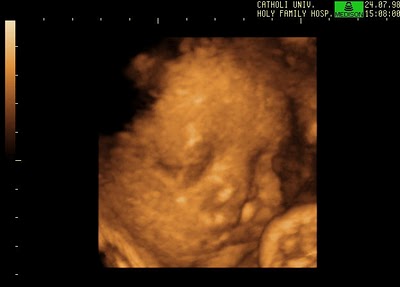
What is Cleft Lip and Palate?

The word "cleft" simply means a crack or divide. A cleft lip is simply the body incorrectly or incompletely closing the facial structures during development. This incomplete closing leaves a cleft, or divide, in the lip and/or palate of the new born. Below is an ultrasound showing a cleft lip

The word "cleft" simply means a crack or divide. A cleft lip is simply the body incorrectly or incompletely closing the facial structures during development. This incomplete closing leaves a cleft, or divide, in the lip and/or palate of the new born. Below is an ultrasound showing a cleft lip
Clefts are normally very repairable and the scare can be almost unrecognizable.


Monday, March 14, 2011

Open only if you are not squeamish.


This post is not for the faint of heart.
This is however, one of the most serious posts that I have ever done.

If you smoke or chew, please stop.
Oral cancer is very very real.
I realize that everyone knows someone that has smoked for
80 years and nothing has ever happened to them.
That is all well and good, until its you that it happens to.

These pictures are of a complete jaw bone removal due to oral cancer.
And yes, if the jaw bone comes out then the teeth must come with it.

Bottom Jaw.

After the jaw bone is removed a new one must be made.
It is fairly typical to make the new jaw out of Metal.
the new metal jaw is lined with one of your ribs that has been taken from you and bolted to the metal. Hopefully, later on some type of implants can be fastened to the metal jaw and you can get teeth back. Until that time you are on pretty much liquid.
X-ray of the new lower jaw.
Hope this scares anyone enough to lick the habit.